
Want to test what you know?
Try our free Grade 8 English quiz — 25 questions, instant results, no sign-up.
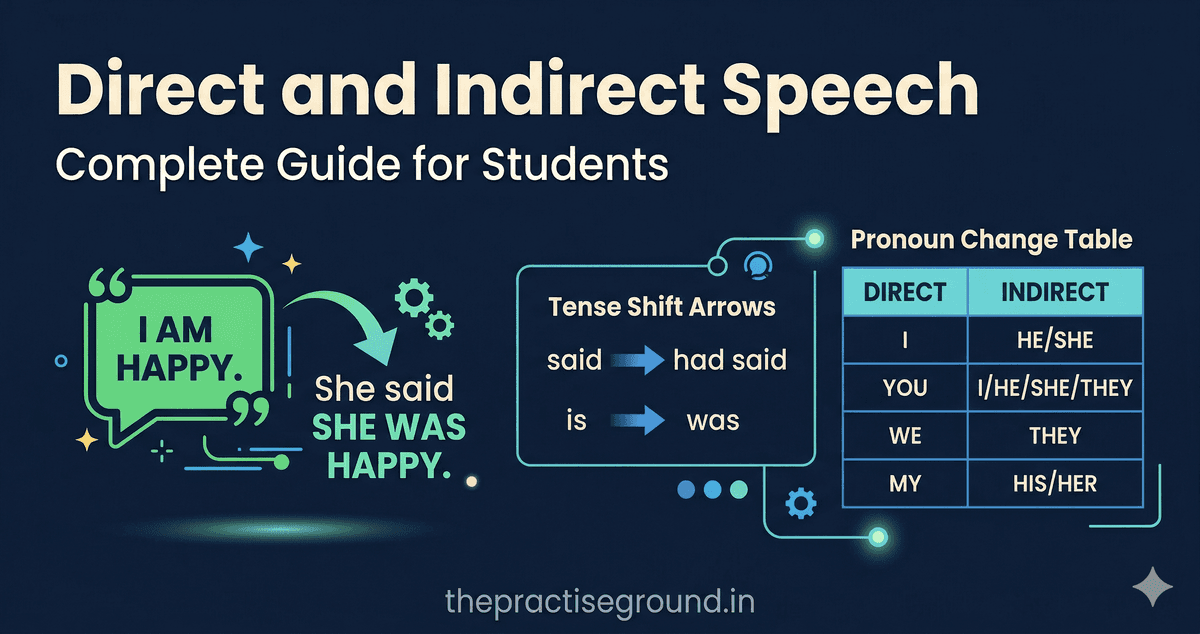
Direct and indirect speech (also called reported speech) is a crucial topic in English exams worldwide—from CBSE in India to Cambridge internationally. Many students find it confusing because of all the rules about verb tense changes and punctuation. Let's simplify it with clear rules and lots of examples.
What is Direct Speech?
Direct Speech is the exact words a person says. We write them inside quotation marks and include the reporting verb. Examples:- She said, "I love reading books."
- He asked, "What is your name?"
- They exclaimed, "What a beautiful garden!"
What is Indirect Speech?
Indirect Speech (or Reported Speech) conveys the same meaning but not the exact words. We don't use quotation marks and the sentence structure changes. Examples:The meaning is the same, but the words are different.
Key Changes in Indirect Speech
When converting direct to indirect speech, several things change:
1. Removal of Quotation Marks
2. Tense Changes (Usually One Step Back)
This is the most important rule. When reported speech uses a past reporting verb, the tense in the quoted speech usually goes back one step:
Present → Past3. Pronoun Changes
Pronouns change according to the context:
4. Time and Place References
Time and place words often change:
Complete Transformation Rules
Assertive Sentences (Statements)
Formula: Subject + said + that + reported speech (with tense changes) Direct: He said, "I am going to Delhi tomorrow." Indirect: He said that he was going to Delhi the next day. Direct: "The exam was difficult," Priya said. Indirect: Priya said that the exam had been difficult.Interrogative Sentences (Questions)
For questions, use "asked" instead of "said" and no quotation marks.
Yes/No Questions:Imperative Sentences (Commands/Requests)
Use "told," "asked," "ordered," or "requested."
Direct: "Please sit down," the teacher said. Indirect: The teacher asked the students to sit down. Direct: "Don't make noise," Mother said. Indirect: Mother told me not to make noise.Exclamatory Sentences
Use "exclaimed" or "said."
Direct: "What a wonderful day!" she exclaimed. Indirect: She exclaimed that it was a wonderful day. Direct: "How beautiful the sunset is!" he said. Indirect: He said that the sunset was very beautiful.Special Cases and Exceptions
When NOT to Change Tense
- Universal Truths
When Using Present Reporting Verbs
If the reporting verb is in present tense, don't change the tense:
Common Mistakes in Indirect Speech
Mistake 1: Forgetting to change tenseImportant Reporting Verbs
Different reporting verbs carry different meanings:
FAQ: Reported Speech Questions
When do I use "if" and when do I use "whether"?
Both work for yes/no questions, but "whether" is more formal. "If" is more common in conversation.
Do I always use "that" after "said"?
Technically "that" is optional, but it's safer to include it in formal exams.
What if the sentence has multiple tenses?
Change each verb according to the rules. "I did it and I will do it again," she said. → She said that she had done it and she would do it again.
Practice Converting Sentences
Try converting these to indirect speech:
Master Reported Speech with Practice
Regular practice is the key! Practice with targeted quizzes and watch your confidence grow.
Conclusion
Direct and indirect speech follows logical rules once you understand the patterns. Focus on the tense changes, pronoun adjustments, and punctuation rules. These changes might seem complicated now, but they'll become automatic with practice. Remember: the meaning stays the same, but the presentation changes.
Start mastering reported speech today and track your improvement!
Taking a quick break? Test yourself!
Pause and try a quick Grade 8 English quiz — see how much you've picked up so far.